In Ponteareas, the Corpus Christi festival is celebrated every year in spring. Its main attraction is the creation of hundreds of meters of floral carpets that cover the streets for the passage of the religious procession. It is a tradition that dates back to the early 20th century when flower carpets were used to cover potholes. This festival was declared a Tourist Interest Festival in 1968, a National Tourist Interest Festival in 1980, and an International Tourist Interest Festival in 2009. Ponteareas has a school of carpet makers, and every year, associations from other parts of Spain and abroad participate. In 2010, several residents created a carpet of 120 square meters in Santiago de Compostela as an offering to Pope Benedict XVI, who was visiting the city during the Holy Year of Jacobean.
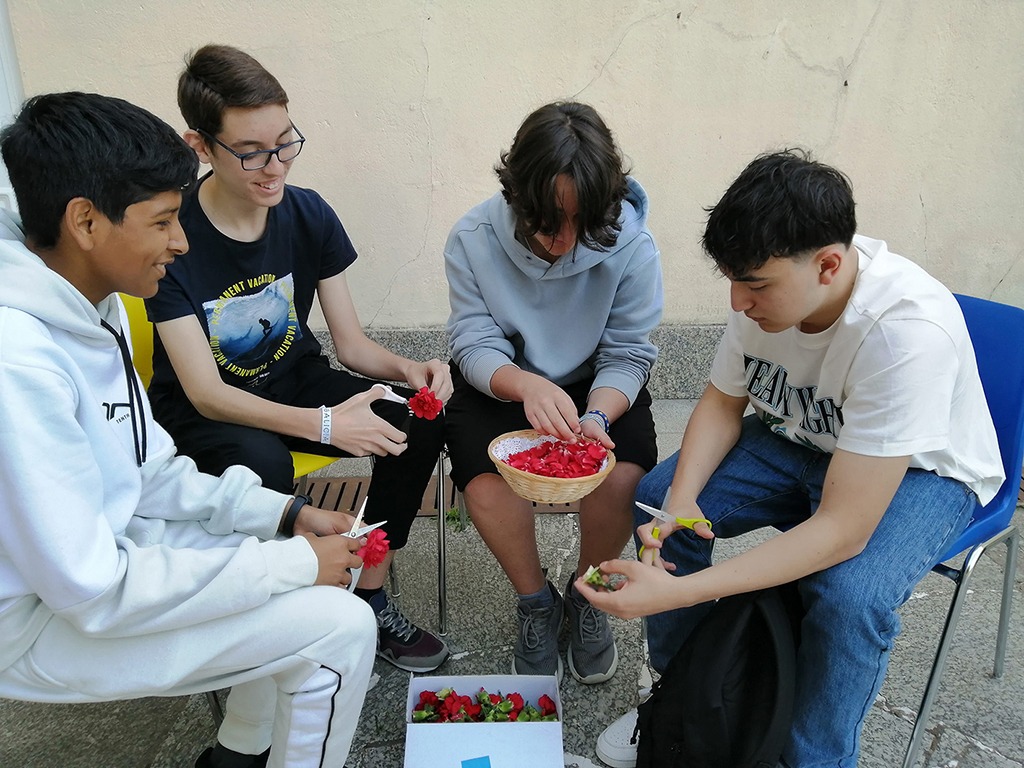
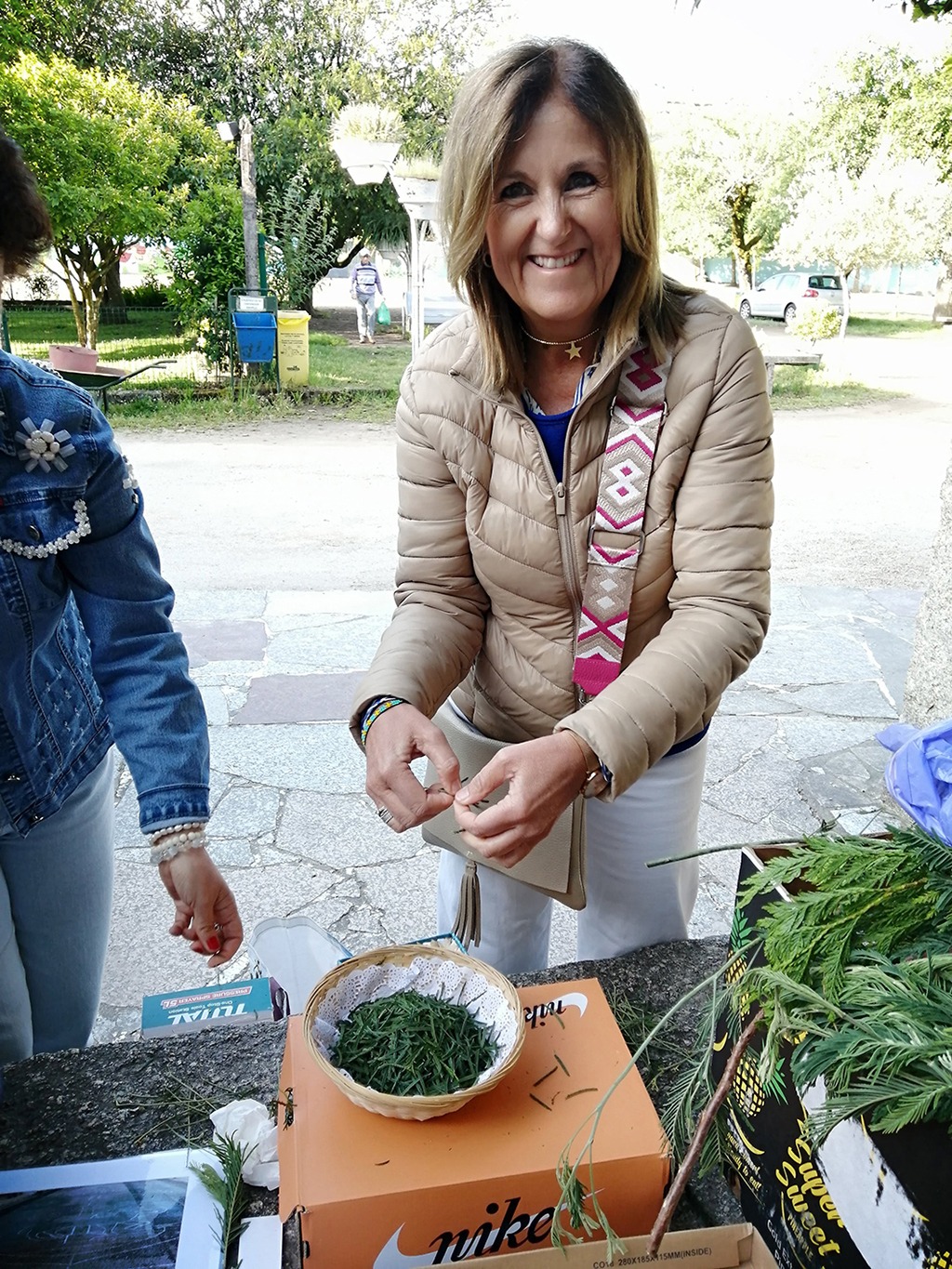
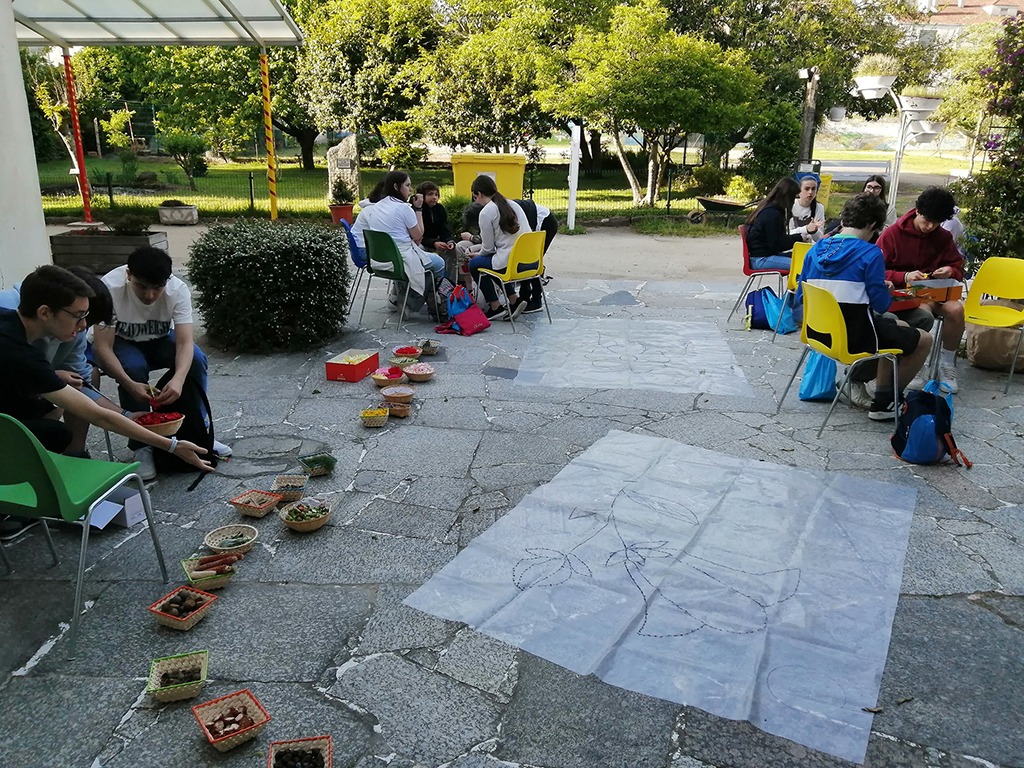
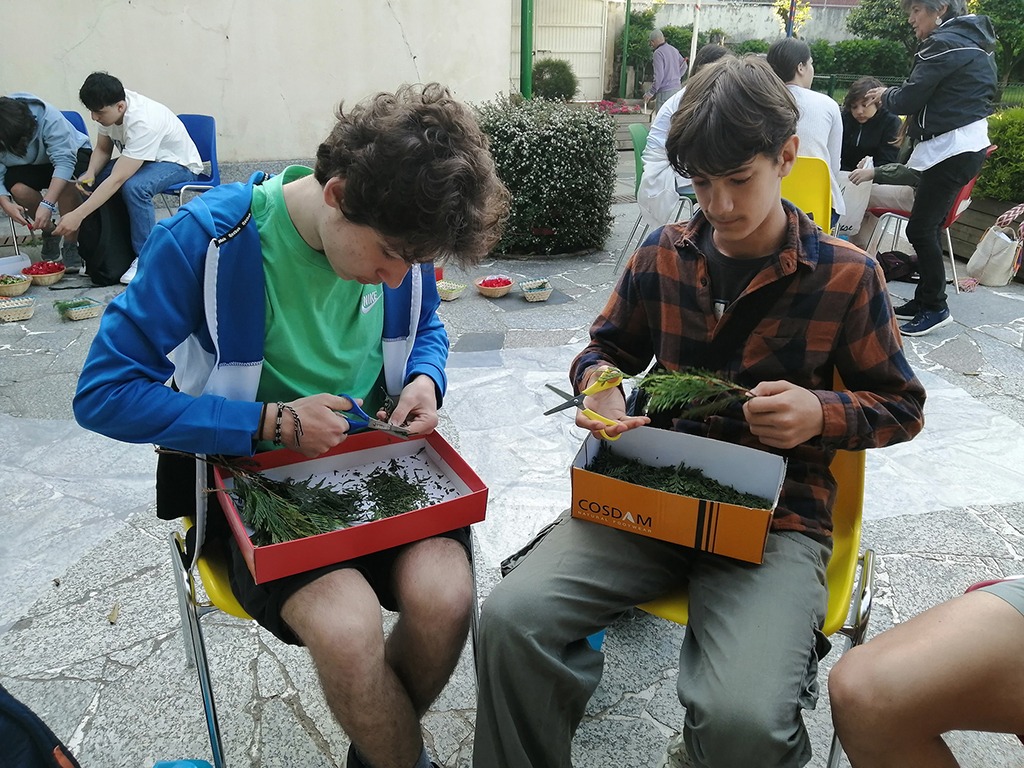
In addition to religious fervor, the festival is celebrated by thousands of visitors who come to enjoy the carpets created in a single night. Residents gather by streets and prepare the material during the month leading up to the festival. A theme is chosen, the design is adapted to the street, and the material is selected based on geometry and color combination. All of this is kept under strict secrecy until the night before the festival. Each person contributes with their skills. Designers transfer the drawing to large plastic templates placed in the street to create the pattern; the younger ones assist experienced individuals in plucking flowers and shrubs while learning the tradition; others go to the countryside to gather the material, which is stored in cool places until it is time to use it. Some make coffee and offer cake to endure the long working hours after the workday. The materials used are diverse, including arnica, coca, reed, fennel, hydrangea, and moss, but innovation occurs every year, even dyeing some plants in the “missing” color. Sand, sawdust, and other materials are also used.
On the Saturday before the festival, the design is marked on the asphalt, and the outlining begins with arnica, a task for the youngest participants. Gradually, the color gaps are filled, and the designers’ idea begins to take shape. If it is a rainy night and the water washes away the work, they start again, and materials are shared between streets. The exact time when the carpet making finishes is uncertain. Many visitors stroll during the night, observing the work of the people of Ponteareas who, kneeling or squatting, shape the carpets. With balconies and windows adorned, the town prepares for the passage of the procession that concludes the beautiful works until the next year.
In Brussels, the tradition of making floral carpets is not as old. It dates back to 1971 and takes place every two years in the Grand Place. It is created by 100 gardeners in just 4 hours, during which they place 700,000 begonias of different colors from Ghent. The end of this carpet comes after a few days when the flowers wither.
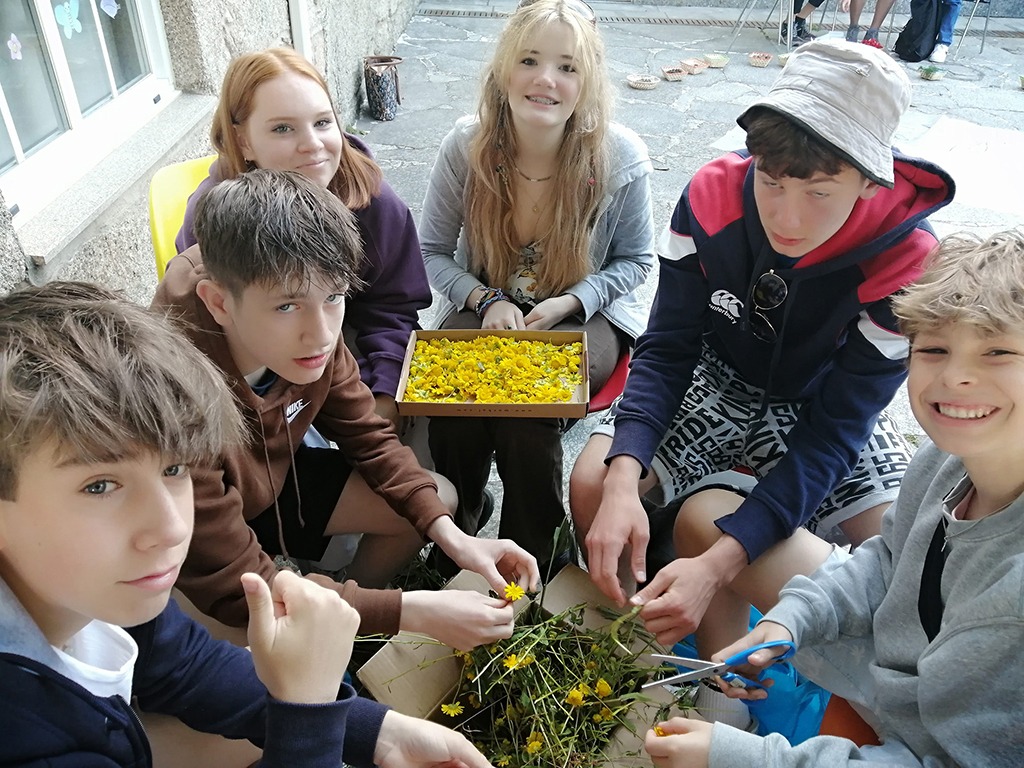
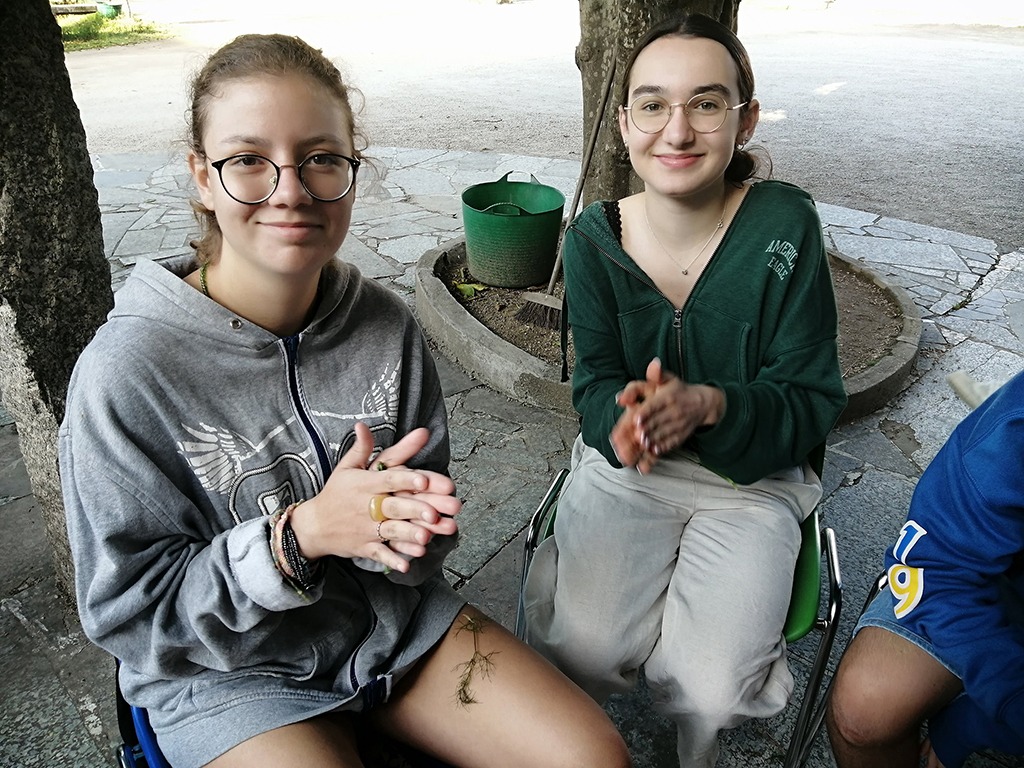
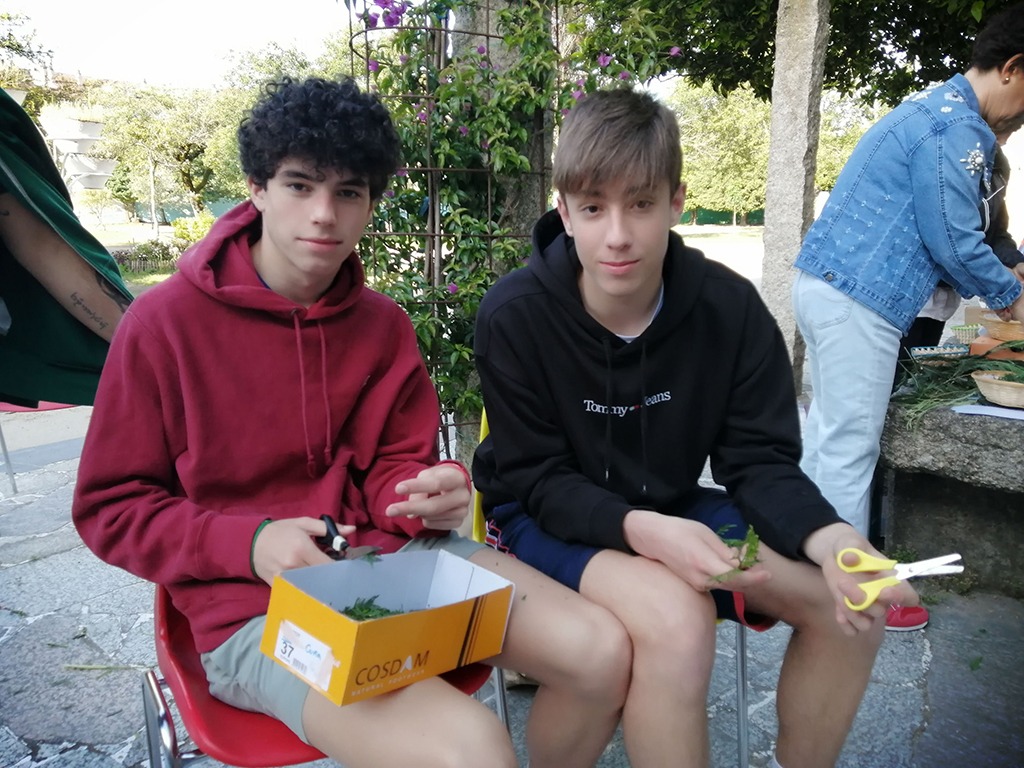
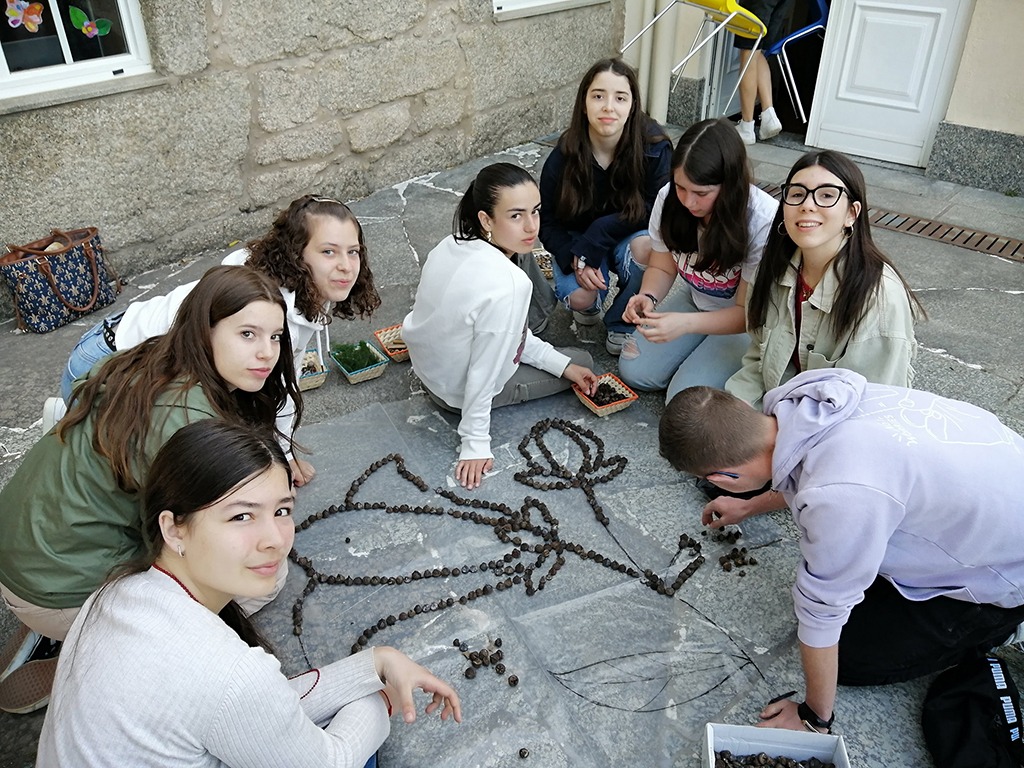
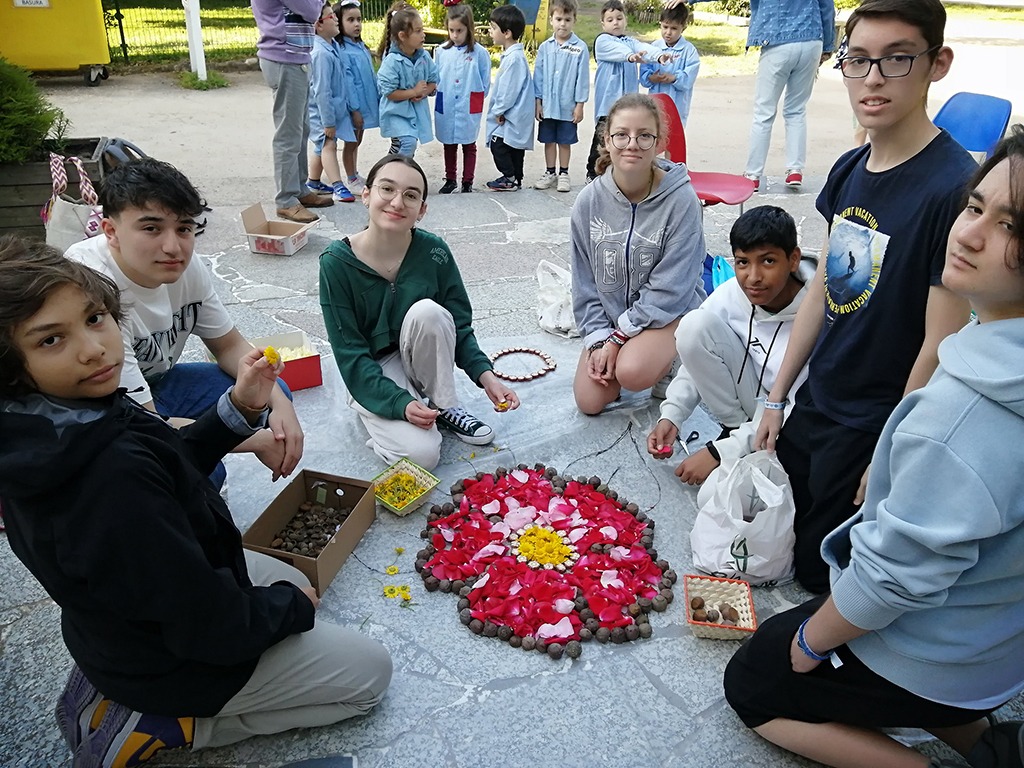
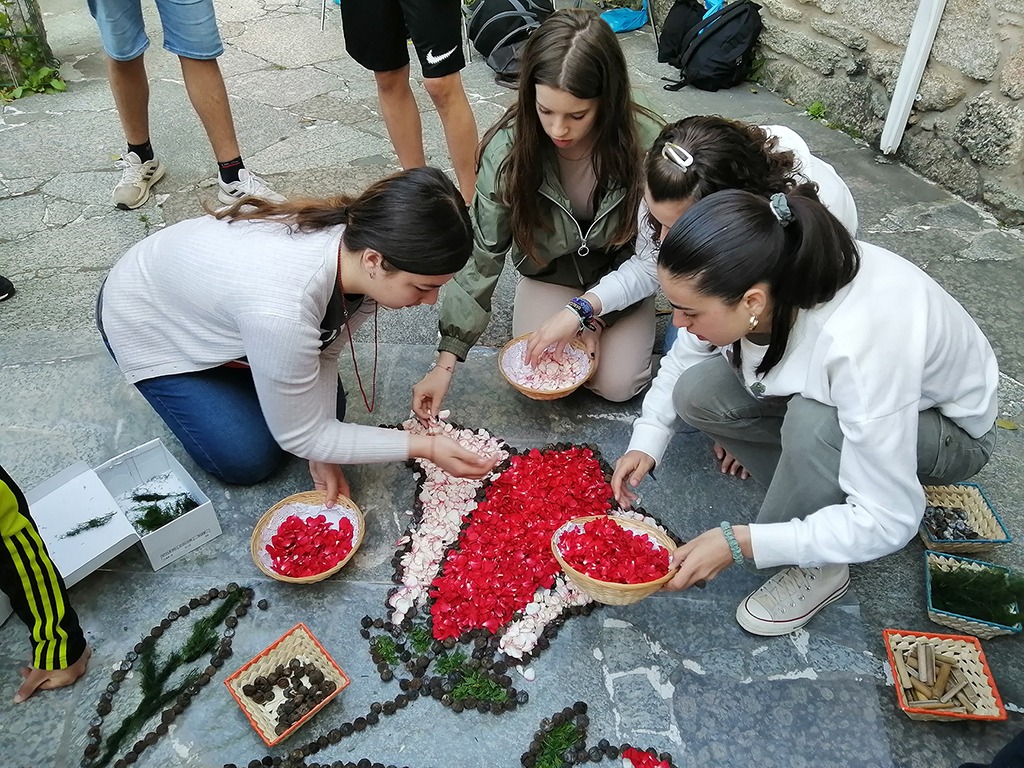
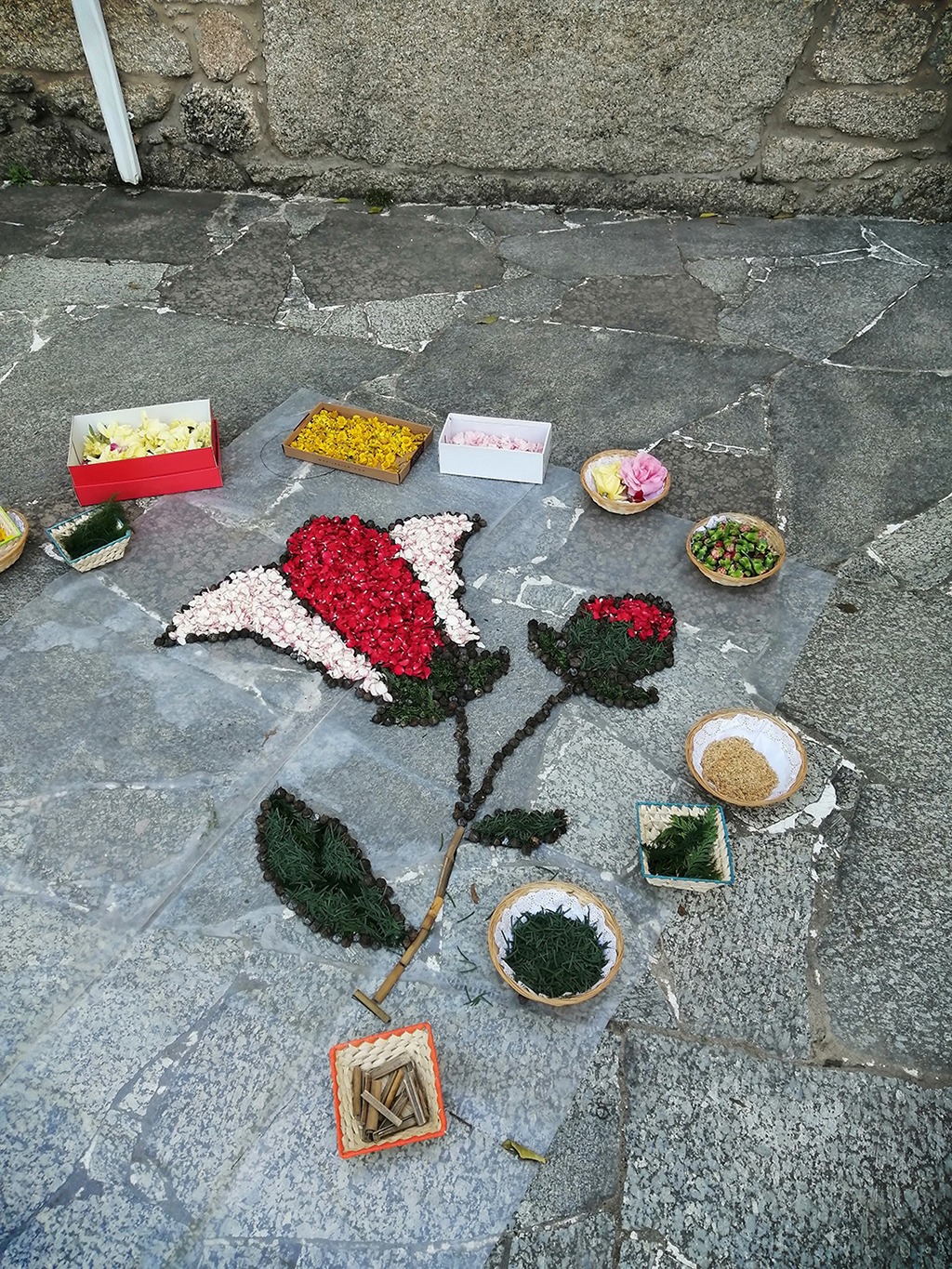
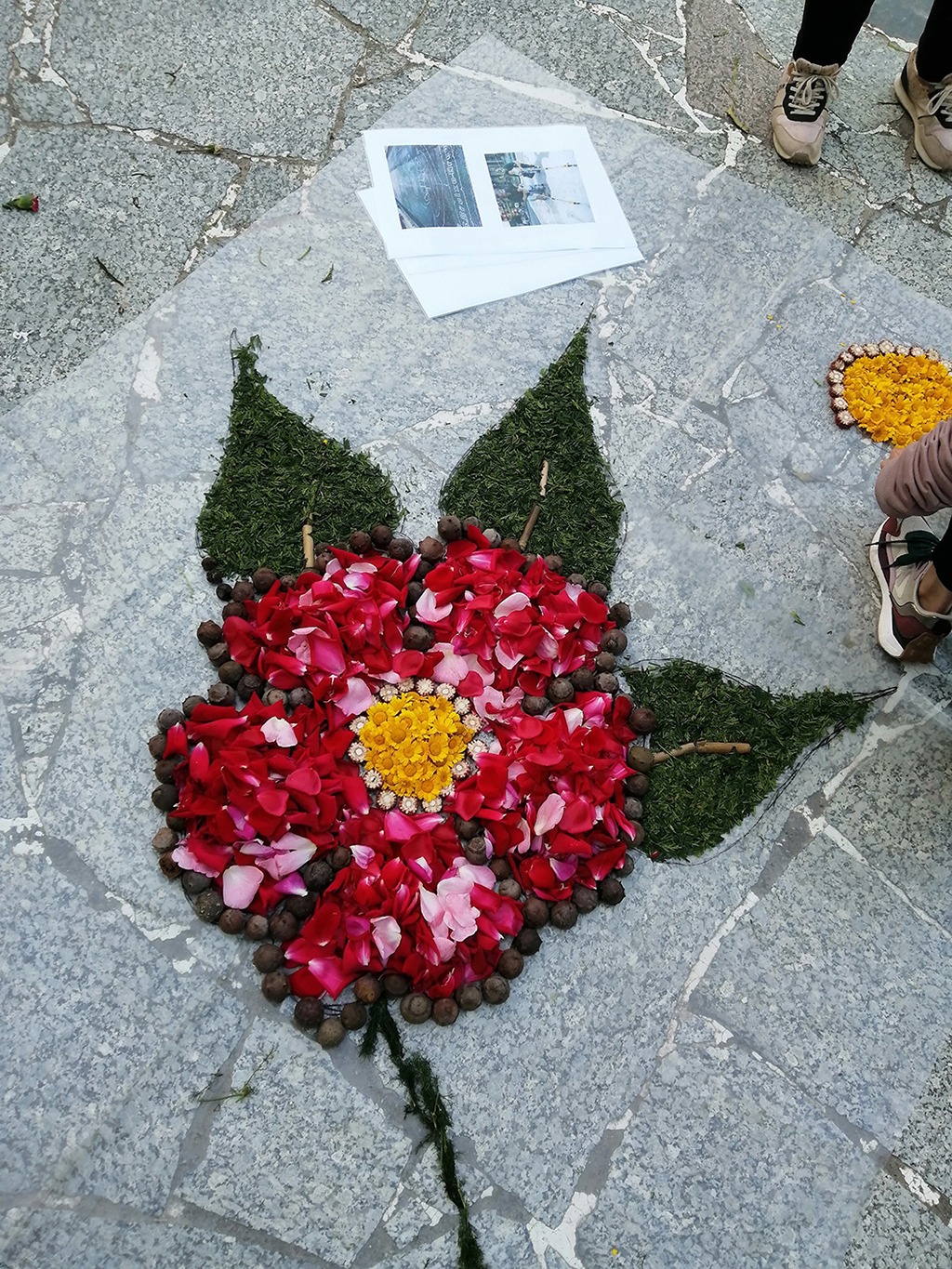
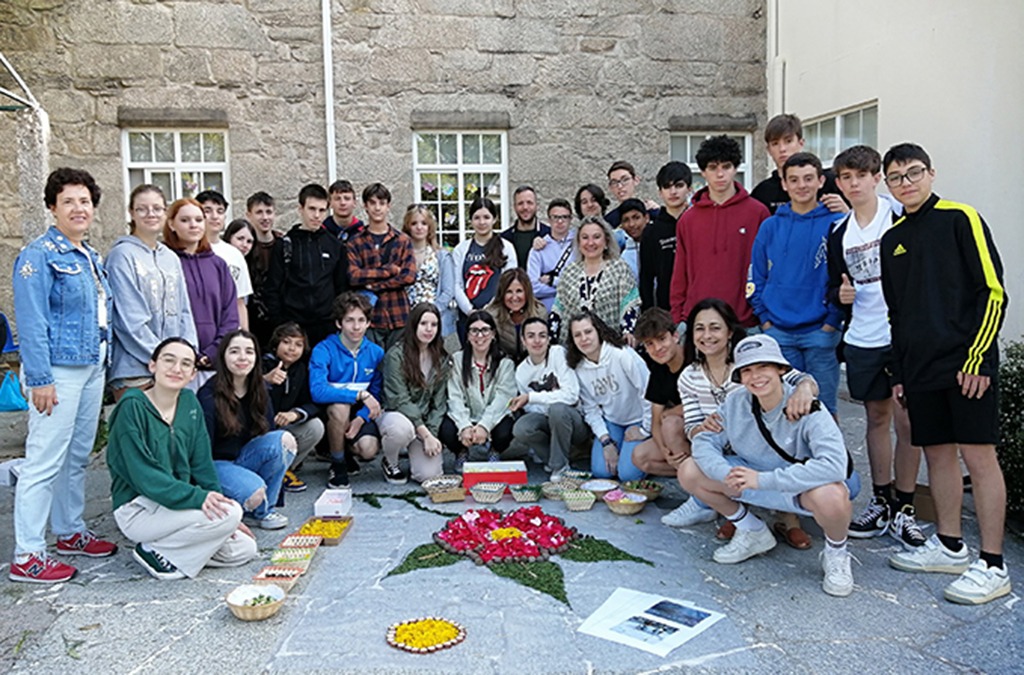
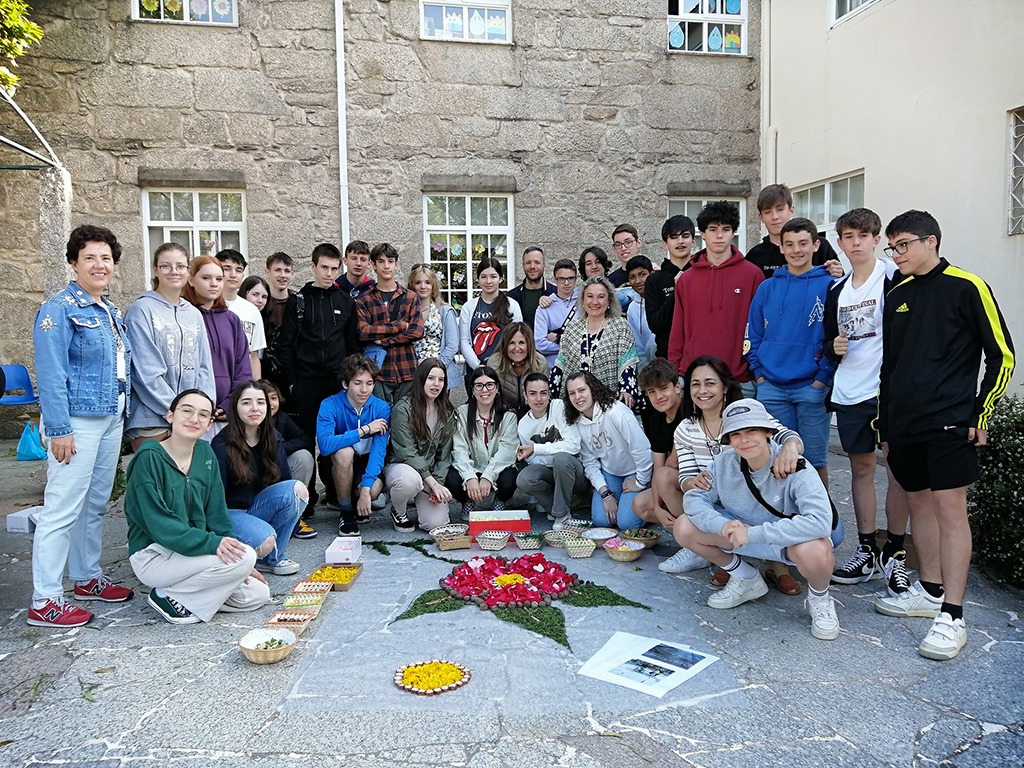
To familiarize our students with this tradition shared by Ponteareas and Brussels, we organized an activity in which they created several small-scale carpets. First, they learned about the event by watching videos from the school of carpet makers. Then, with the help and guidance of members of the association and Ponteareas City Council staff, they formed teams, prepared the material, and got to work. The Galician students showed their Belgian counterparts the Galician names of the most commonly used flowers and leaves. It was a great experience, and they enjoyed it a lot.